
Lamar student takes love of puzzles into veterinary research
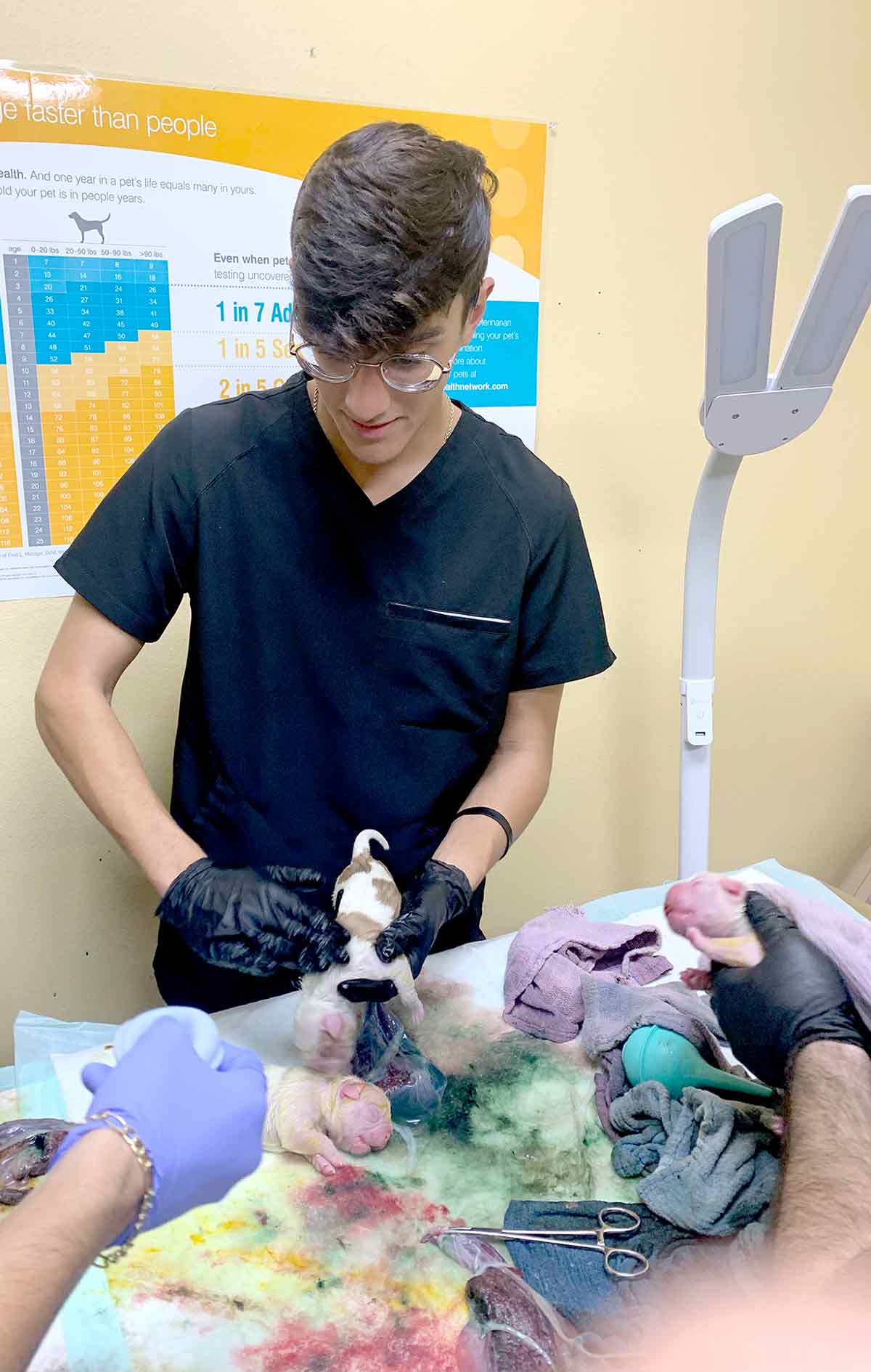
For Ryan Servantes, every animal presents a mystery, and every disease offers another puzzle to solve.
“I’m a real big fan of puzzles,” Servantes said. “I see things and I’m just trying to solve them.”
The Lamar University biology pre-veterinary medicine major will put that mindset to work through the U.S. Department of Agriculture’s Salty Wilson Jr. internship program, where he will work alongside government veterinarians to help combat animal disease outbreaks in Texas.
“My interests in veterinary medicine are more unique than a lot of people really go for,” Servantes said. “Probably 99% of people that are interested in veterinary medicine want to work with small animals and stuff.”
Servantes grew up on a ranch surrounded by goats, chickens and other animals, he said. A high school internship at a veterinary clinic in the Rio Grande Valley helped him discover that veterinary medicine could combine his passion for animals with his interest in solving problems.
“Through my experiences and what I’ve learned, I’m very interested in research and interested in actually going out into a field and working with things that are just kind of outside of a clinical practice,” he said.
The Mission senior said each animal that enters the clinic presents a new challenge.
“A dog comes in, it’s just like another puzzle I’m trying to crack or trying to solve,” Servantes said. “And just keeping that level of engagement just really made me really, really love the work.”
At Lamar, Servantes said he discovered research offered another way to investigate those questions.
“I was awarded a SURF project for it,” Servantes said. “It was studying (angel wing) disease in ducks, and coming up with my own research proposal, my own project, and actually going out there doing it and being able to present my work.
“It took a lot of the animal side, the disease side, and then the environment side. Besides all the vet clinic hours that I’ve worked and things like that, I think that is what (the USDA’s) more interested in. I would say because it aligns with their goals as well.”
Cervantes found the USDA internship while searching online for research opportunities, he said. The program offers financial support for veterinary school tuition, professional experience and government health benefits.
“It just seemed like a long shot for me,” he said. “But I was like, ‘Might as well apply, see what happens.’ I don’t lose anything by applying.”
Servantes applied in February and learned he had been selected in August. The process involved multiple rounds of questions, screening and government background checks.
“It was a very lengthy process,” he said. “But it was just a lot of waiting, a lot of patience, and a lot of praying and hoping.”
The internship will pay for Servantes’ studies while he attends graduate school.
“I just felt a relief knowing that I won’t have to work so hard and take out loans, and just think about the crushing student debt that comes with these type of grad schools,” he said.
“So, my worry now is just to get in and be able to accomplish what I need to do, get my schooling done, focus on class, and I won’t have to worry about the money side of things.”
Through the internship, Servantes said he expects to investigate animal disease outbreaks, including screwworm, by collecting samples and data in the field, and analyzing findings in a laboratory.
“I get to learn a lot from actual vet students and veterinarians, and their experiences through school, what their challenges were, what are some tips,” he said.
Servantes said he credits Lamar faculty members with helping him develop the confidence to pursue the opportunity.
“Lamar’s offered me a lot of opportunities and things I don’t think a bigger school would have,” Servantes said. “The professors and the actual directors of research and things like that, they actually have a relationship with you and they want to see you succeed.”
As he prepares for the next stage of his education, Servantes said he hopes other students will pursue opportunities even when they doubt their qualifications.
“You’re always going to feel underqualified, I think, when you’re applying for something that’s really, really great and really impactful,” he said.
“I just hope people have the courage to go out there and apply for things that they’re scared of and just take a leap of faith.”