Funeral museum explores how world remembers the dead
Houston — Death is one of the few experiences shared by every culture, yet the ways people confront it are remarkably different. Some gather around colorful altars filled with photographs and flowers, while others observe centuries-old religious ceremonies steeped in solemnity and symbolism.
At the National Museum of Funeral History, these traditions come together under one roof, offering visitors a glimpse into how humanity has learned to mourn, celebrate and remember.
The museum transforms a subject often avoided in everyday conversation into an exploration of history, religion, art and cultural identity. With 19 permanent exhibits, the museum invites visitors to look beyond the finality of death and discover the stories people leave behind.
Among its most compelling displays are exhibits dedicated to Día de los Muertos and the funerals of Catholic popes. Though their customs and ceremonies differ, both demonstrate the importance of ritual in preserving memories and honoring lives.
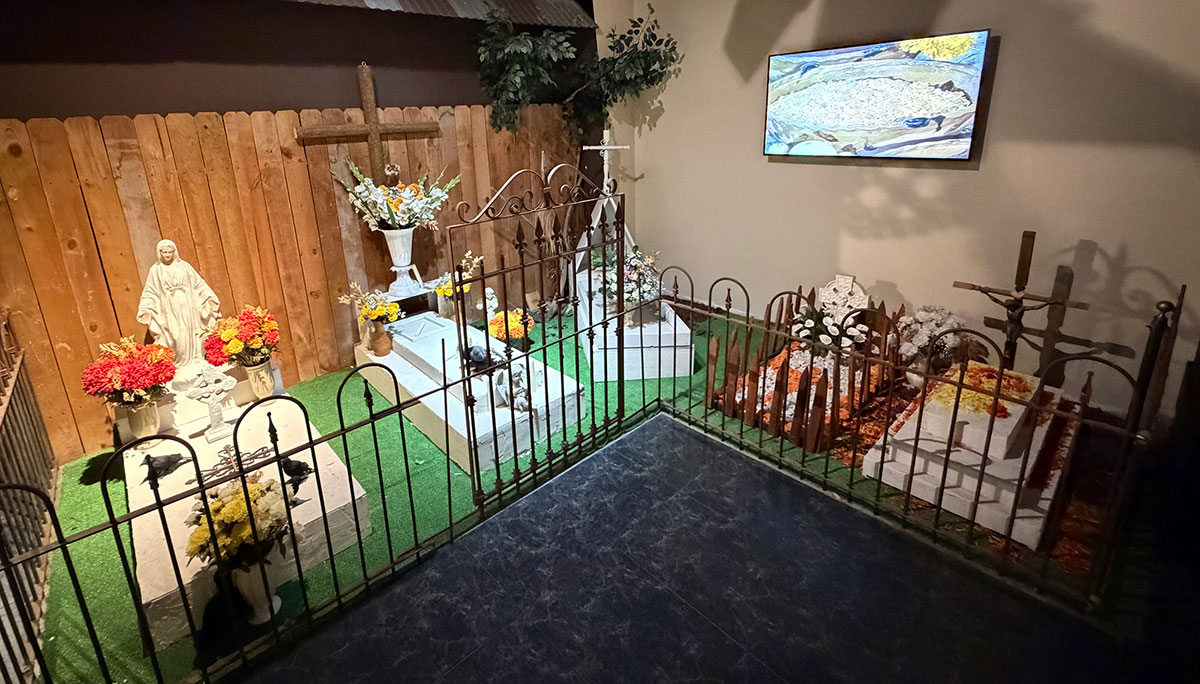
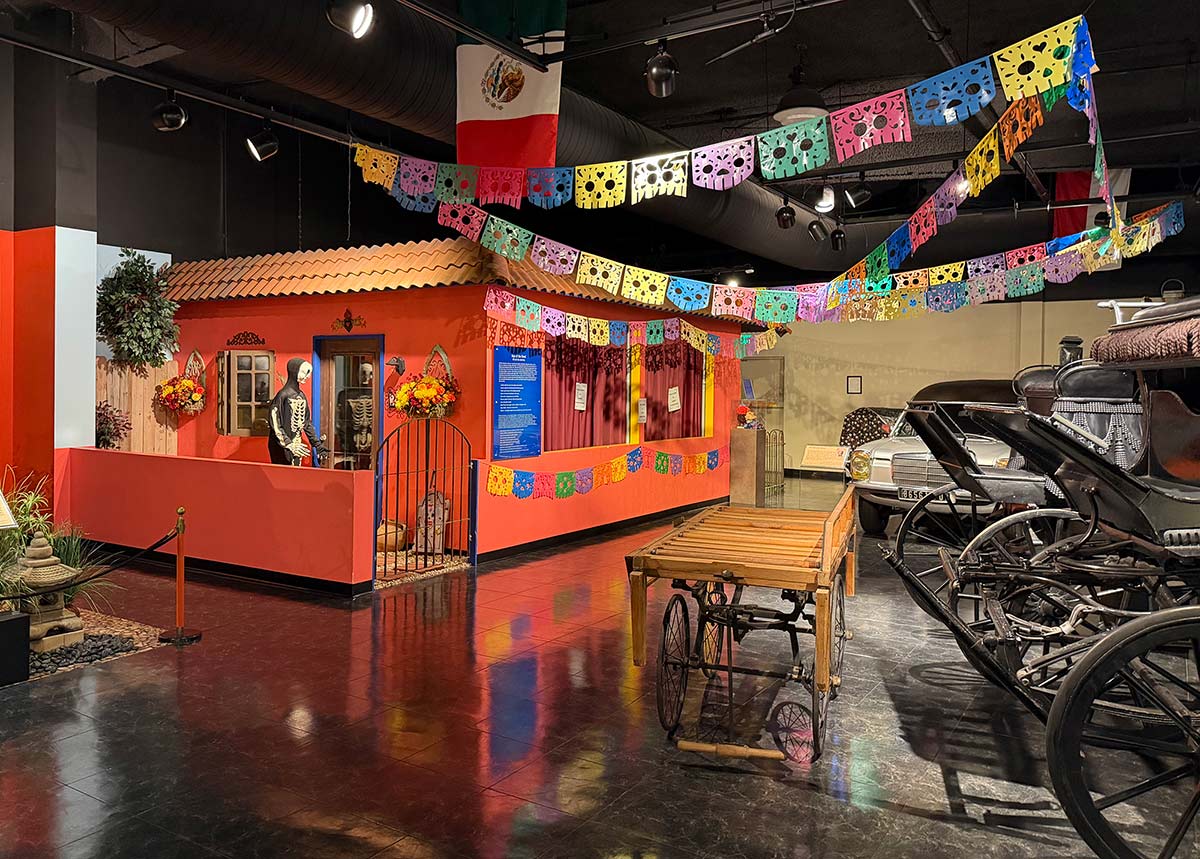
For visitors, the journey begins with a colorful look at Día de los Muertos, or Day of the Dead, a Mexican tradition observed Nov. 1 and 2.
The exhibit recreates traditional settings associated with the holiday, including a Mexican home and cemetery decorated for the occasion. An ofrenda, or altar, features photographs and offerings helps keep memories alive, turning familiar objects into symbols of love and remembrance.
Every element of an ofrenda carries a personal meaning. Photographs preserve the faces of loved ones, while favorite foods and meaningful belongings recall the personalities and experiences that made them memorable. Flowers and candles add color and warmth to spaces dedicated to remembering the dead.
The exhibit also highlights community participation through altars created by local artists, which opportunities for visitors to contribute mementos honoring their own loved ones.
The display offers an introduction to a tradition that brings together Indigenous Mesoamerican customs and Catholic influences. More than a celebration of the past, it demonstrates how cultural traditions can help families maintain a connection with those they have lost.
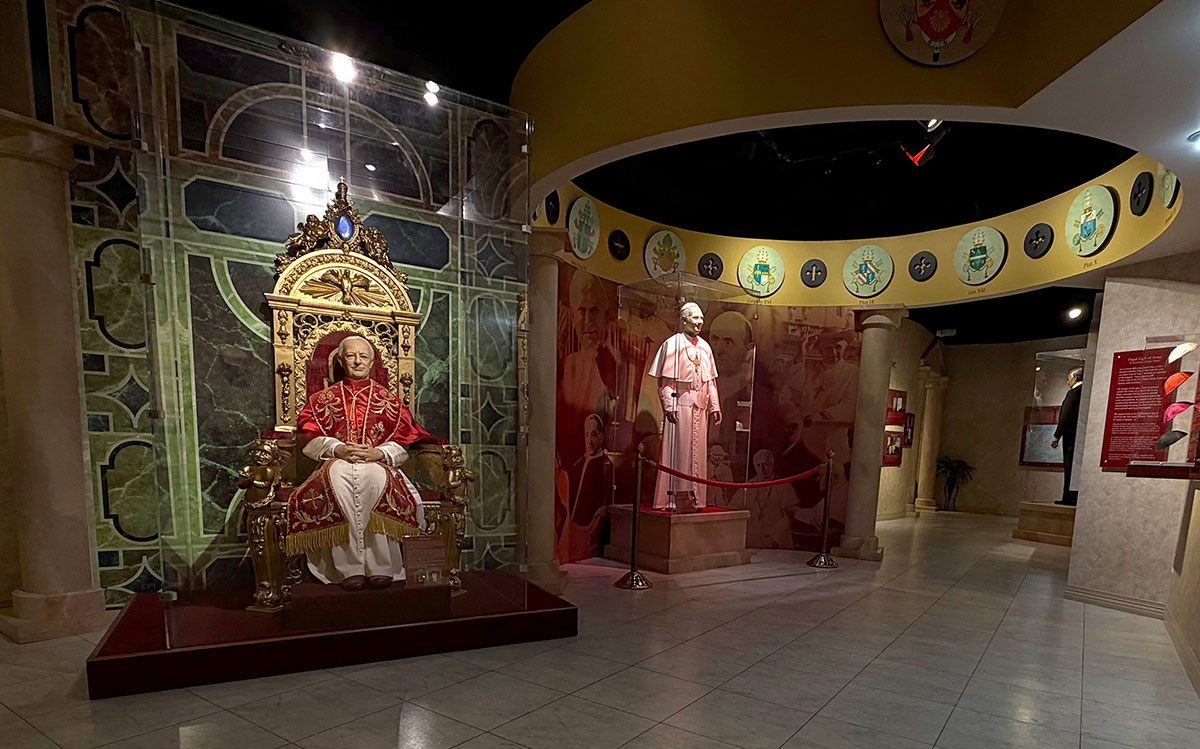
The museum presents a striking contrast in its exhibit, “Celebrating the Lives and Deaths of the Popes,” which explores the elaborate ceremonies surrounding the deaths of leaders of the Catholic Church.
Developed in collaboration with the Vatican, the exhibit immerses visitors in the history and symbolism of papal funerals. Historical artifacts, ceremonial clothing and recreated settings provide insight into traditions that have developed over centuries.
Among the objects on display are uniforms worn by members of the Swiss Guard, responsible for the pope’s personal security, and vestments associated with Gammarelli, a historic Roman tailoring house known for clothing successive popes.
The exhibit also explores the rituals surrounding a pope’s death, from preparations for public viewing to funeral ceremonies and burial. Through these displays, visitors learn how religious objects, clothing and carefully observed customs communicate respect for a spiritual leader, while connecting contemporary ceremonies to the church’s history.
Where Día de los Muertos emphasizes family, color and personal remembrance, papal funerals reflect the solemnity and formal traditions of a global religious institution. Yet both exhibits share a common purpose: ensuring that the lives of the departed are remembered.
The museum’s exploration of funeral traditions extends well beyond these two displays. Historical hearses reveal how funeral transportation has evolved, while exhibits on embalming, cremation and 19th-century mourning customs demonstrate how technology and social expectations have influenced the ways people prepare for burial.
Visitors can also discover New Orleans jazz funerals, which incorporate music into public expressions of grief, and Japanese funeral traditions that reflect distinct cultural and religious practices.
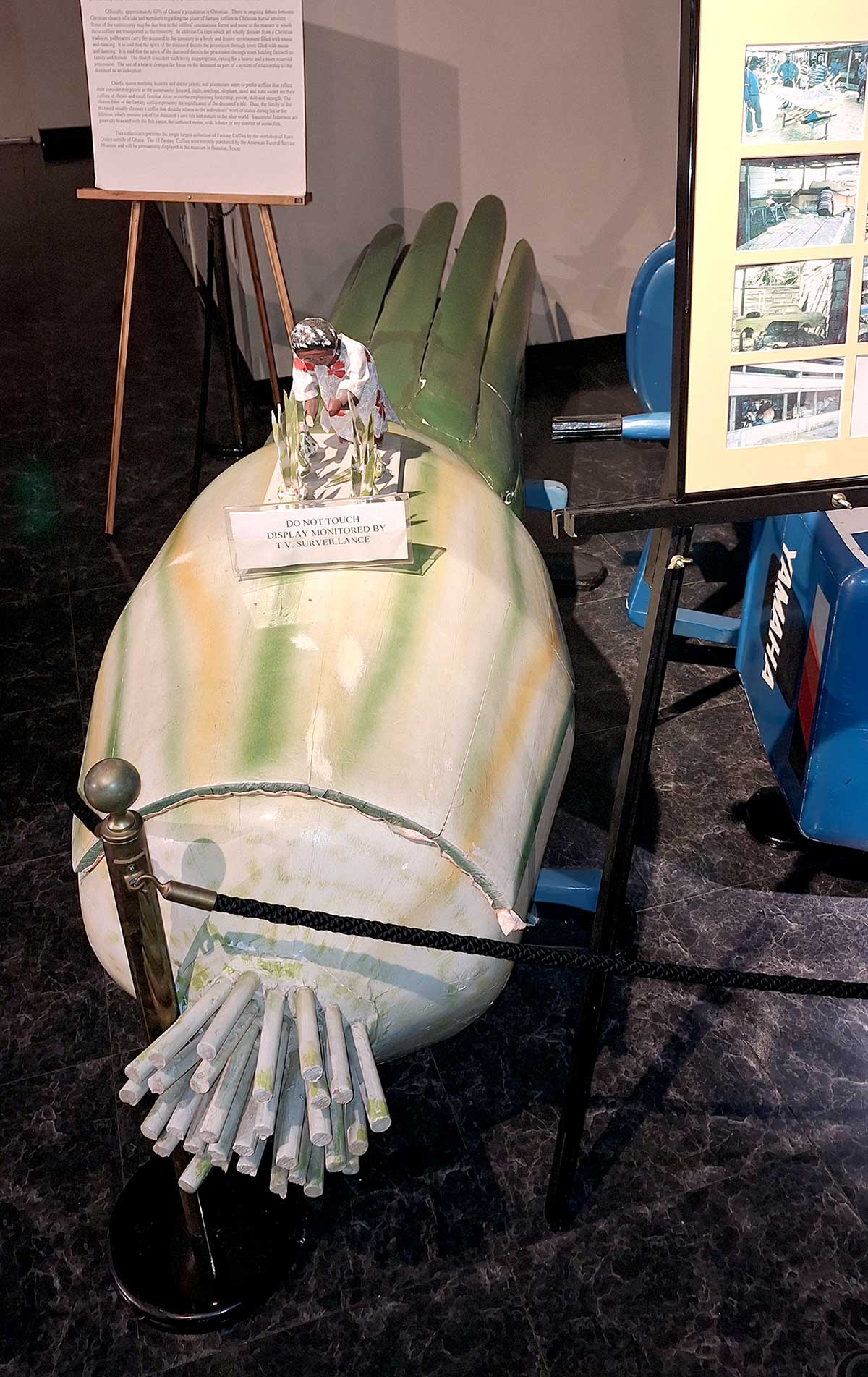
Another unusual collection features fantasy coffins from Ghana. Designed in shapes inspired by a person’s identity, profession or interests, these creations turn an object associated with death into an expression of individuality.
The museum also displays a certified replica of the Shroud of Turin, an artifact associated with the burial of Jesus Christ.
Together, the exhibits reveal that funeral traditions are about more than what happens after death. They reflect the values, beliefs and relationships that shape people’s lives.
The National Museum of Funeral History is located at 415 Barren Springs Drive. Hours are 10 a.m. to 4 p.m. Monday through Friday, 10 a.m. to 5 p.m. Saturday and noon to 5 p.m. Sunday.
Admission is $15 for adults, $12 for seniors ages 55 and older and veterans, $7 for children ages 6 to 11, and free for children 5 and younger. For more, visit nmfh.org.