
Halloween was not always family friendly holiday
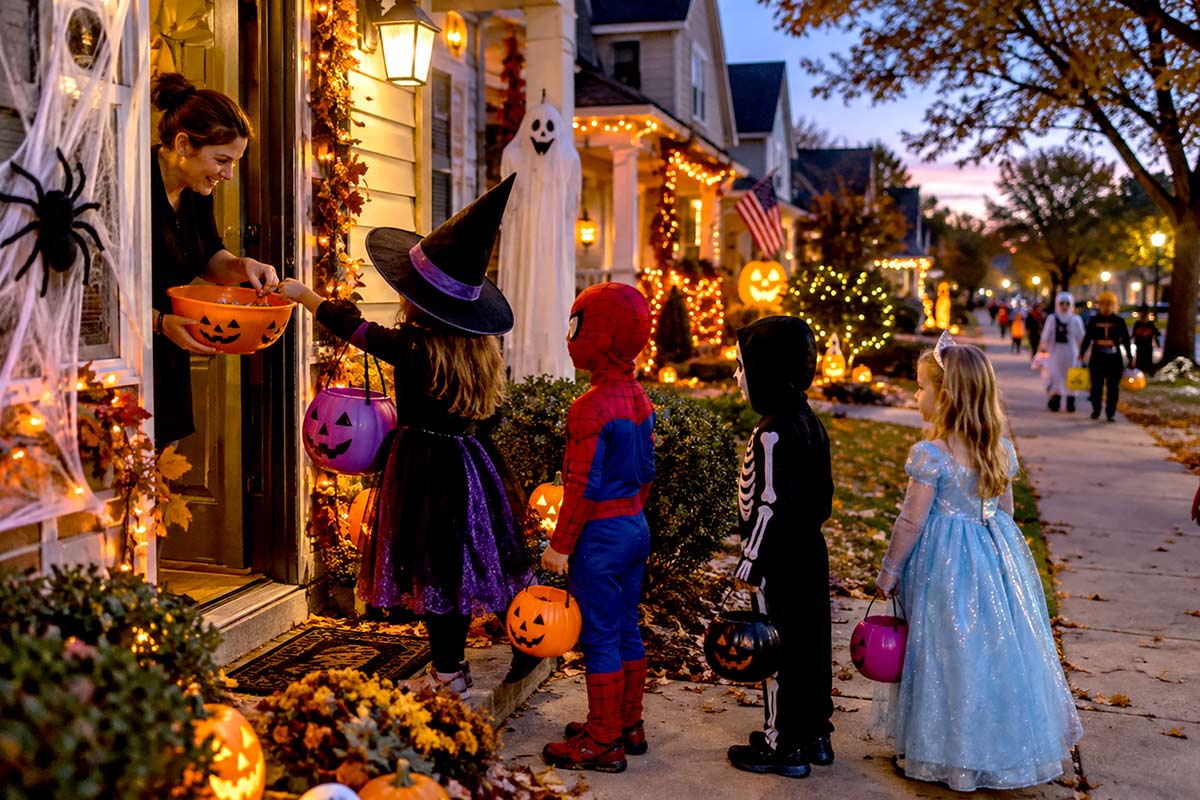
Stores everywhere are stacked with items for the spooky season, people are buying costumes, making jack-o’- lanterns, and handing out candy corn to celebrate Halloween.
Originally the holiday was created during the Iron Age for pagans to celebrate their dead, and was originally called by many other names such as All Hallows Eve, All Saints Day and All Souls Day.
Halloween was based around the Celtic holiday Samhain, a three-day fire festival beginning Oct. 31, meant to celebrate life and death, according to history.com The holiday was created to commemorate loved ones who had recently passed away.
The celebration served as an invitation for their loved one’s spirits to rejoin the living.
During the holiday, the living would dress in costumes, feast and make jack-o’-lanterns from hollowed out gourds and turnips. During the festival, sacrifices were made to the spirits as an offering.
However, after the Roman Invasion of Britain in A.D. 43, Christianity spread across the world which caused many pagan traditions to either be erased or to evolve into Christian narratives, which led to the holiday changing from Samhain to All Hallows Day, All Saints Day or All Soul’s Day.
Christians used the holiday to celebrate saints and martyrs.
Instead of bringing loved ones back from the dead, the church encouraged the poor and young children to partake in “souling,” a tradition where children and beggars go house to house, carrying candles or lanterns, and offering their prayers to neighbor’s and loved ones who had died.
In return, Christians would receive a small soul cake, that was similar to a hot cross buns. The purpose was to pray for souls trapped in purgatory. If enough prayers were offered, a soul would fly into heaven.
In some parts of England, mummers — actors in costumes — would dress up to ward off evil spirits. Some Christians dressed as the evil spirits or as saints to ward off evil souls.
While the holiday disappeared in Britain, it was carried across the ocean and became a big part of American tradition after the immigration of Irish and Scottish immigrants in 1840.
But over time, the purpose of the holiday was lost. The beggars became rowdy during the holiday, demanding food and drink from Christians or threatening to cause destruction to homes, which led to the popularity of masks during the holiday.
The rowdiness of the holiday remained until the 1930s, with teenagers causing mass destruction to their communities, piling stones on train tracks, pouring honey on doorsteps, stopping up neighbor chimneys, destroying mailboxes, or breaking into and burning down businesses on Halloween night and, worst of all, assaulting pedestrians.
Some Halloween pranks even resulted in the deaths of the victim, and occasionally the prankster as well.
On Oct. 31, 1930, a group of young pranksters pulled an alarm box, despite their being no fire. A firefighter by the name of J.T. Pearson rushed to the location and struck a locomotive. Pearson flew out the firetruck and died instantly.
Cities considered banning the holiday, until communities banded together and hosted Halloween parties. They encouraged young people to dress up and go trick-or-treating in hopes the pranksters would not cause destruction during the holiday.
While the holiday is now a chance for children to gorge on candy, or adults to dress as their favorite superhero or sexy nurse, most are unaware of the holiday’s Celtic or the destruction it caused to communities across the nation.