
Dia de los Muertos celebrates lives of deceased family members
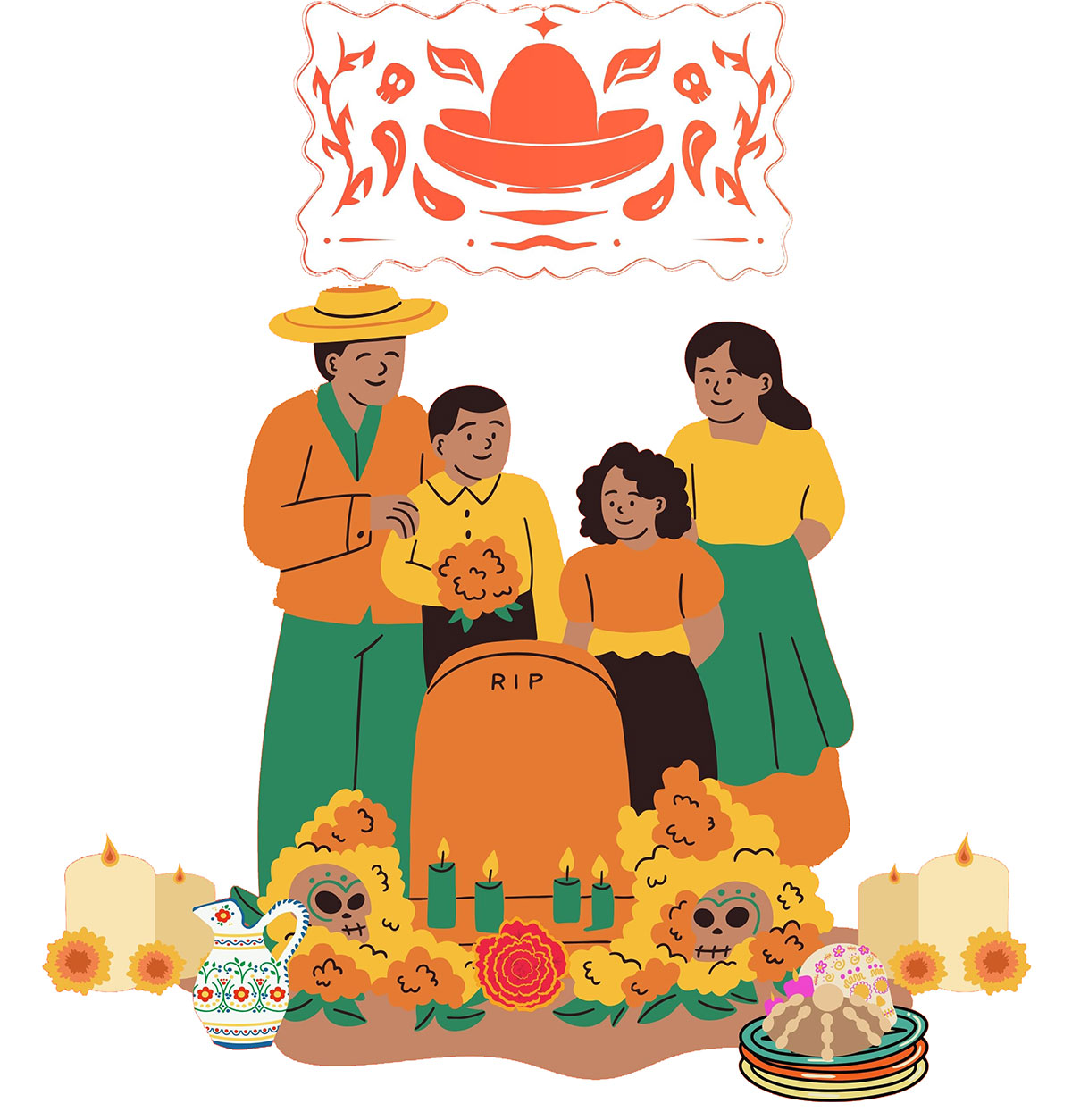
Honoring the passing of a loved one during Día de los Muertos is not spent in mourning and dark aesthetics, but is filled with the elements, vibrant colors and celebration, as death is not the end, but just a new chapter in another world.
The holiday’s origin can be traced back to the time of the indigenous people, particularly the Aztecs, Toltecs, Olmecs and the Maya, who believed that life and death could still connect with each other.
The Aztecs in particular believed that a person’s soul embarks on a several-year journey through Chicunamictlán, the land of the dead, before reaching their final resting place in Mictlan, the underworld realm.
Families helped their loved ones complete their journey through offerings that were left to nourish and guide the spirits during their travels.
In modern day celebrations, Día de los Muertos varies throughout Mexico, but the meaning behind the holiday remains the same.
Many people make “ofrendas,” or altars in their home to honor their loved ones who have passed away. Altars contain flowers, candles, and incense while families place old photos and favorite foods of their passed loved one to personalize it.
Each ofrenda also incorporates the four elements: water, earth, fire and wind.
Water is used for purification while earth is usually symbolized by food to nourish the spirits on their journey.
Fire is often seen in lit candles — lighting the path for visiting spirits.
Wind can be seen through “papeles picados,” paper banners that have specialized cut-out patterns that allow souls to pass through.
Among the elements, colors are also a huge part of the holiday. Vibrant colors are one of the most recognizable parts of the celebration, as the bright colors are a reminder that loved ones should be celebrated in happiness and fond memories.
Some colors found in the holiday include orange, red, purple and white.
Orange is a signature color, especially found in the petals of “cempasúchil,” or marigolds. The flower is often arranged in a pathway leading from homes of families to the altars, as bright color is believed to guide spirits back home in Mexican tradition.
The color red usually found in flowers and various decorations highlight families’ affections and bonds with one another beyond death.
Seen throughout religious ceremonies, the color purple is a reminder that people can reflect and pray while enjoying celebration. In many places, families visit the cemetery to clean tombs and graves while adding decorations and offerings in bright colors.
White is a universal sign of peace and purity and it is used in candles that are placed on pathways and altars to light the way for spirits that are visiting.
Though Día de los Muertos is filled with celebration, it is important to understand that the holiday is not just a colorful festival. It is a centuries-old ceremony that allows families to connect with their loved ones using elements and colors to deepen their connection with the afterlife.