May is Stroke Awareness Month, highlighting what a stroke is, its symptoms and its impact.
There are two main categories of strokes: ischemic and hemorrhagic, alongside mini-strokes called Transient Ischemic Attack.
“A mini stroke is when there’s a temporary blockage in one of the arteries or blood vessels in the brain,” Sommer Shackelford, associate dean for undergraduate nursing and part-time family nurse practitioner, said. “And that’s similar to an ischemic stroke.”
A TIA serves as a warning sign, according to the American Stroke Association. It occurs 15% of the time before a stroke. Within a year, a third of people who had a TIA have a major stroke.
The difference between ischemic and hemorrhagic strokes is whether the artery is blocked or ruptured. About 87% of strokes are ischemic according to the American Stroke Association.
“That’s again, where there’s a blood clot in one of the blood vessels in the brain,” Shackelford said. “What happens is not enough blood can get to the brain tissue and it starts to die, and that’s where the symptoms come from. A hemorrhagic stroke is a bleeding stroke. This where there will be leaking of blood into the brain from one of the blood vessels in the brain. And it can vary on where that happens. It can be within the brain or even around the brain.”
A hemorrhagic stroke can cause some people to have a thunder-clap headache, Shackelford said.
“It’s all of a sudden this horrible headache, almost like something smacked you in the head,” she said. “Hemorrhagic will also sometimes have nausea and vomiting, and they can really, really decline quickly because the blood is pressing on the brain.”
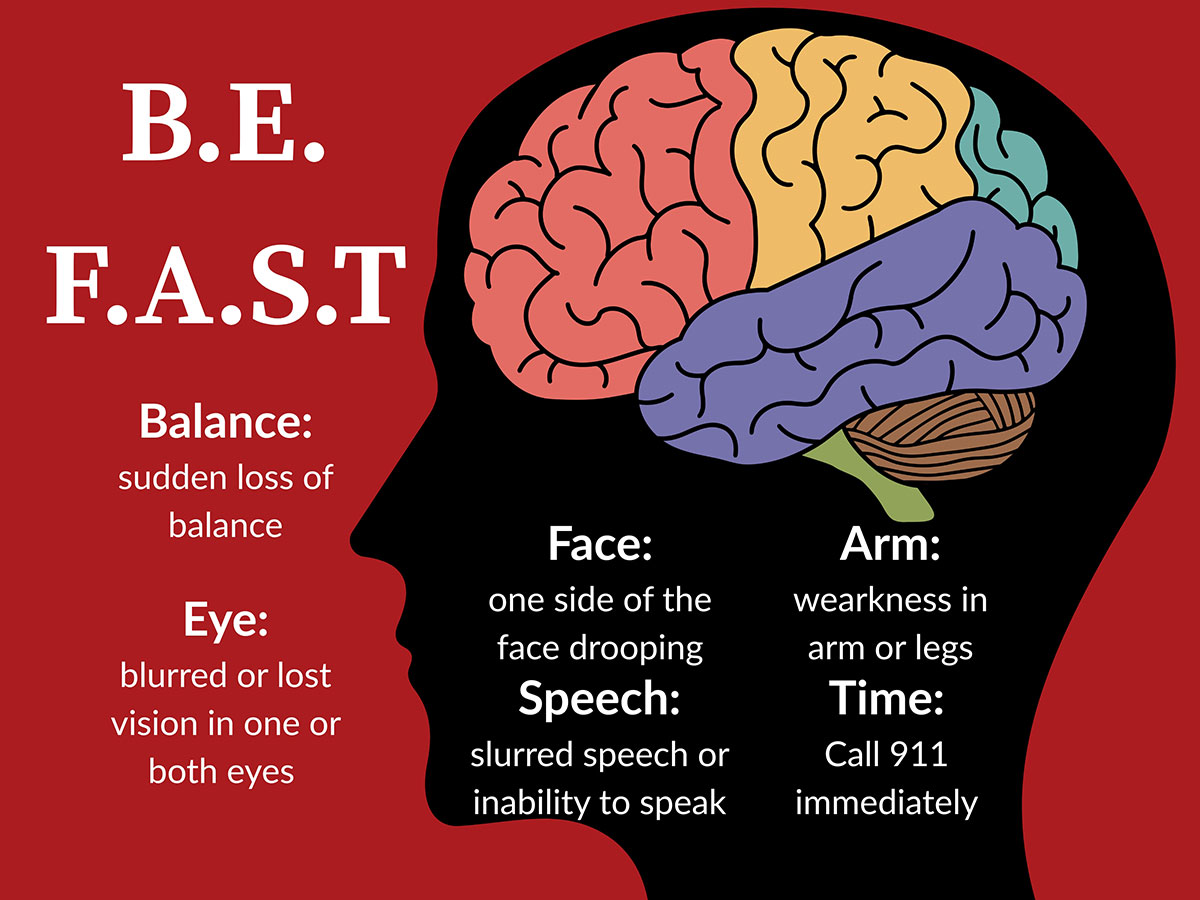
The acronym BE FAST is designed to help recognize symptoms. It stands for Balance, Eye changes, Face drooping, Arm weakness, Speech difficulty and Time to call 911. Even if someone is only experiencing only one of these symptoms, it could mean something, Judson P. LaGrone, assistant professor and articulation program director, said.
“The quicker that we can get this treated, the better recovery it is for the majority of people, and the quicker, hopefully, that those signs can go away and resolve,” he said.
Risk factors include high cholesterol, blood pressure, diabetes and atrial fibrillation. However, social factors also play a role in the risk of strokes, such as lack of health equity.
“There’s a lot of areas and a lot of different ethnicities that don’t have health equity,” LaGrone said. “So, when they’re not trusting to go to the doctor, or they’re fearful to go to the doctor or the hospital, then they’re not getting treated and they don’t catch the warning signs early. And then they have a stroke and die.”
People believe older adults are the only ones who have strokes, LaGrone said, but young people are at risk, too.
“College-age students can have strokes as well, and it may be undiagnosed things that they have and not aware of,” he said.
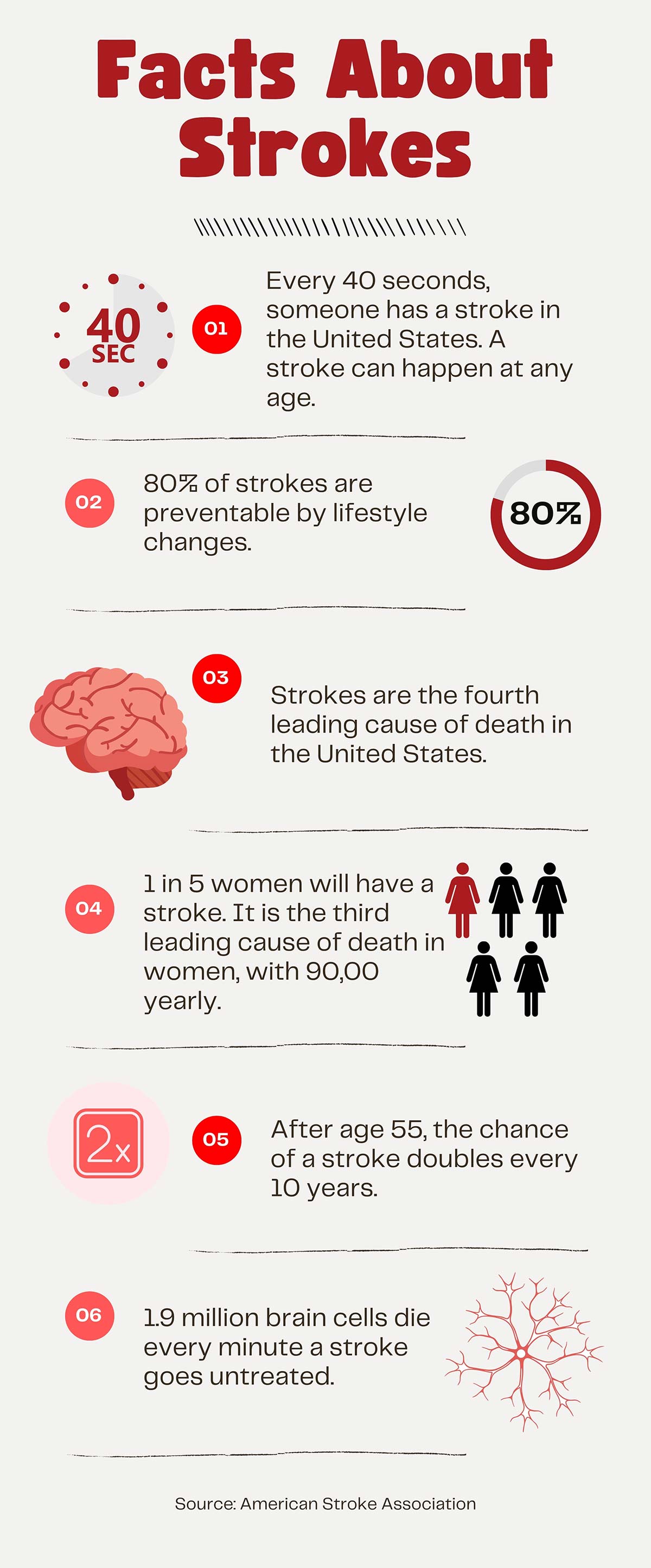
Women are more likely to have a stroke than men and it is the third-leading cause of death in women, affecting one in five women.
“Women have some unique risks because hormones can increase the risk of stroke,” Shackelford said.
People that take hormones have increased risk. Older people have hormone replacement, for example. Birth control increases the risk of stroke in younger women, especially if they smoke.
The impacts after a stroke depend on which part of the brain is affected and how severe the stroke is, Shackelford said.
“Some people are no longer able to speak, no longer able to swallow, no longer able to walk —so that would be the most severe,” she said. “And then there’s anything in between where they have a limp, or have one arm that’s really weak.”
A stroke can disrupt a function that is controlled by any part of the brain.
“Speech or language can be affected,” Karen Whisenhunt Saar, assistant professor of speech-language pathology, said. “Speech is really the sounds that we create with our mouth — the motor ability to create output, put sounds together in certain sequences so that we can make words. What the words mean, grammar, that’s language.”
Speech and language can be affected, but intellectual capacity is intact, Whisenhunt Saar, said.
“One very harmful, stigmatizing aspect of having a speech or a language disorder, like aphasia or dysarthria, is that when people sound different, or when people struggle accessing their language processing systems, the general public can tend to judge them as not being cognitively intact, and that’s a very harmful stigma,” she said.
Families and caregivers can use partner training to learn techniques to aid in the recovery process, Whisenhunt Saar said, adding that family and community need support as well.
“I consider aphasia to be a social disorder, because when we communicate, when we talk, we talk with other people,” she said. “Language is something we use to connect with and to have discourse with other human beings. So, when there is a disorder to communication, when there’s a disorder to language, that’s a shared disorder.”
The American Stroke Association states that 80% of strokes are preventable by lifestyle changes such as diet and exercise.
“It’s really important that people start exercising,” Shackelford said. “We recommend that they do 30 minutes, five days a week, but I think it’s more important to talk to someone about where are they starting from, and what are they willing to do.”
A Mediterranean diet is most effective at reducing cardiovascular and stroke risk, Shackelford said. It is made up of whole foods, vegetables and healthy fats.
“That’s the diet that’s the most healthy,” she said. “But I think if we ask people, ‘OK, I want you to eat a Mediterranean diet,’ to me that’s not very specific for the patient. So, usually I ask them, ‘How many times do you eat fast food a week? How many times do you eat in a restaurant? Do you drink sodas? Do you eat chips? Do you eat candy? Of course, alcohol.’ And then we start to try to change some of those things.”
Education can make a difference in preventing strokes, it can even save a life, LaGrone said. It’s important young people educate themselves and make sure that their families know about the risks.
“(Say), ‘Hey, do y’all know what FAST means?’ he said. “And going and just bringing that simple tool to the family.”
For more information visit, stroke.org.