Thrifting is stylish antidote to over consumption
Fast fashion, according to the dictionary, is “the rapid production of inexpensive, low-quality clothing that often mimics popular styles.” Think about Shein, TEMU, Tiktok Shop — any way to get cheap clothes quickly. How many of those clothing items do we wear every day? And how many have we thrown away because they fell apart or went out of style?
Unsurprisingly, 92-million tons of clothing is thrown away every year with 11.3-million tons in America alone. Donating clothes to thrift store ensures they don’t end up in landfills. It is both an environmentally conscious and trendy fashion option.
Why Fast Fashion is Popular
Fast fashion is easily accessible and oftentimes extremely cheap. Looking at the biggest and most popular inexpensive fashion line, Shein, we find women’s shirts are priced as low as $1.18 and men’s as low as $1.28. Women’s bottoms are as low as $2.02 and men’s as low as $0.48. With the ability to get an entire outfit for less than $5, it is no surprise the company had an estimated 88.8 million active shoppers in 2023, with 17.3 million in the U.S., according to David Curry in his article, “Shein Revenue and Usage Statistics (2025),” on businessofapps.com.
Alongside lower costs, fast fashion caters to the trends of the times, and this is especially evident on Shein. Scrolling through the app, crop tops, graphic tees, ripped jeans and anything that’s hot on the market is remade. However, trends rapidly change so production must be extremely fast-paced to make sure they don’t miss out. Can something made this fast be made in an ethical way?
Fast fashion ethics
Ethical concerns in the fast fashion industry were brought into the spotlight on April 24, 2013, in Mykhail Helm’s article, “Beneath the Seams: The Human Toll of Fast Fashion,” which focused on the collapse of eight-floor Rana Plaza factory in Bangladesh which killed 1,134 people and left thousands injured. A day before the disaster, large cracks were found in the structure and shops on lower floors were closed. But garment factory workers were ordered to return to work on the upper floors the next day.
The article notes that 75% of fast fashion workers are women, who are often subjected to violence and harassment in the workplace. The Clean Clothes Campaign details the conditions Indonesian women face in the factories. The female employees report that, “Girls in the factory are harassed by male managers. They come on to the girls, call them into their offices, whisper into their ears, touch them, bribe them with money and threaten them with firing if they don’t have sex with them.”
These are not the only ethical concerns with fast fashion, though. UNICEF estimates in the article, “Children’s rights in the garment and footwear supply chain,” that more than 100 million children are affected in the garment and footwear supply chain globally. This estimate includes not only children of parents in the industry, but also those located near factories as well as children that are working in the industry themselves.
The majority of fast fashion items are made in developing nations, where workers face low pay and harsh work environments. According to the University of Alabama at Birmingham Institute for Human Rights Blog, in the article “Fast-Fashion: Unethical and Unsustainable” by Lindsey Reid, only about 3% of clothes purchased in the United States are also made in the United States, down from about 90% prior to the 1960s. Helm’s article explains that “fast fashion is one of the most labor-intensive industries, with each piece of clothing handmade along a complex supply chain that stretches across countries in the global south such as Bangladesh, India, China, Vietnam and Indonesia.”
The industry employees about 60 million workers, but “less than 2% earn a living wage,” Helm writes. In 2023, protests in Bangladesh over inadequate wages led to four garment workers killed by government forces and more than 100 workers and advocates being imprisoned. The Bangladeshi government raised the minimum wage by 56% to $113 per month, which still does not meet the $210 monthly living wage nor the living wage of $302 necessary to lift people out of poverty.
Another ethical concern was brought up when unique designs made their way onto Shein. The website Ethically-Dressed.com published the article “40+ Businesses Shein Stole Designs From: The Complete List” by Malu Hernandez where she cited the independent fashion brands that Shein has taken designs from. This is considered art theft and plagiarism, as these brands were not only not asked for permission but are not given any portion of the sales.
When Shein steals these designs without partnering with or crediting the independent brand, they often take the brand’s prospective customers as well. With Shein’s low prices, it becomes more difficult for the brands to compete if their prices are higher. If they do not copyright their designs, they are often unable to take legal action in these scenarios.
However, these ethical concerns are not the only issues that have been explored in the world of fast fashion.
Environmental Impacts of Fast Fashion
Fast fashion, while it is convenient, has detrimental impacts on the environment. Most people wear an article once or twice, and then it is often thrown away. This fast fashion waste is responsible for almost 10% of global carbon emissions according to earth.org, but that is not the only way in which it affects the environment. Martina Igini lists 10 startling facts about fast fashion waste in her article, “10 Concerning Fast Fashion Waste Statistics.” One of her statistics is that the average U.S. consumer produces 81.5 pounds of textile waste each year.
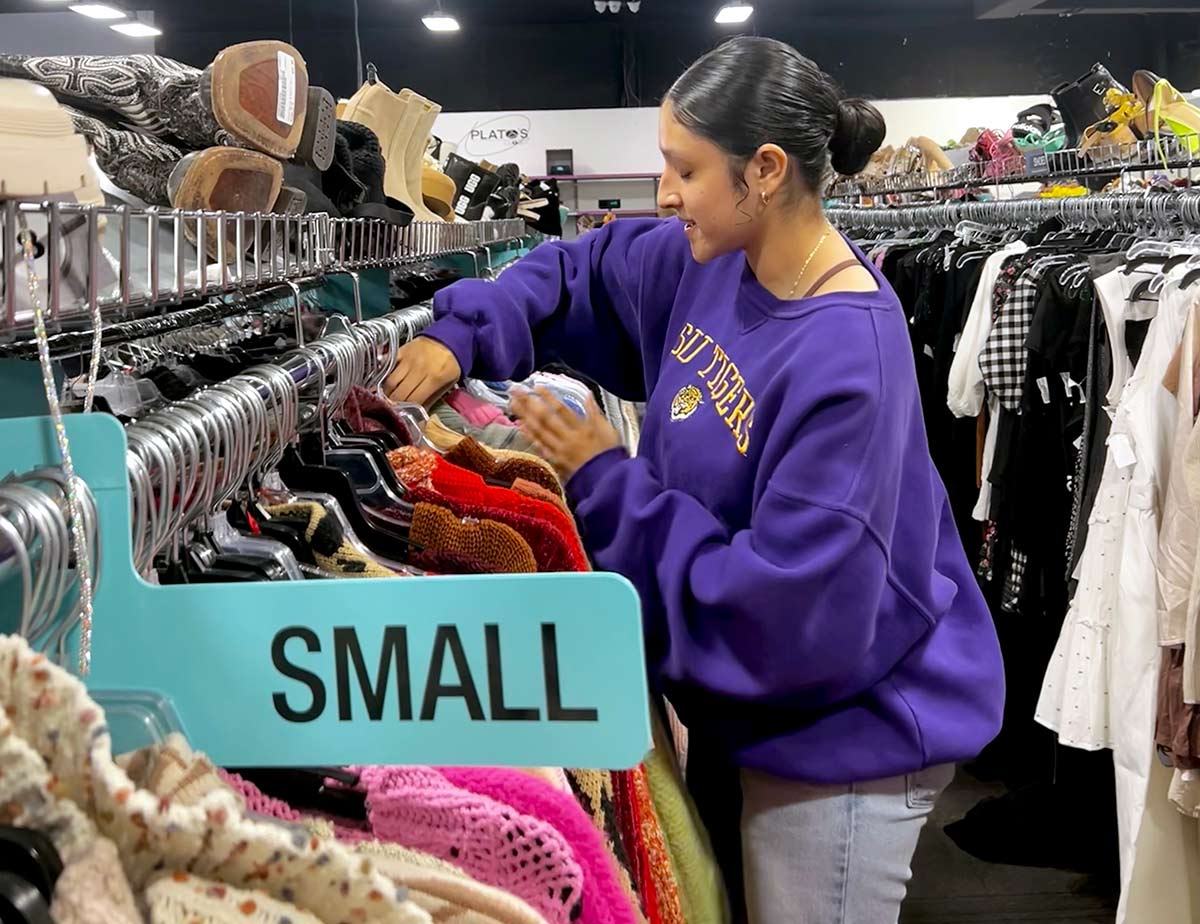
However, fast fashion items do not have to be thrown away. Thrift stores work to fill in the gaps, taking clothes to resell and to keep them out of landfills. Plato’s Closet is just one of the corporations that allow customers to sell their unwanted clothing.
“You can earn some cash from it,” Yesenia Mireles, assistant manager of Plato’s Closet in Beaumont, said. “But also it’ll be the little grain of salt that we all pitch in to help the environment.”
Thrifting
The dictionary defines thrifting as, “The activity of looking for or buying goods from thrift stores or other places that sell used things such as clothes, books, or furniture.” It allows you to not only pitch in your grain of salt, but to find styles that one might not have been able to find shopping new.
“I think thrifting became more popular once people really realized that a lot of old styles are coming back,” Mireles said. “So, Y2K, vintage — a lot of these things you can only get if you thrift. You won’t find it at a new store like Hollister.”
While some people have noticed price increases as thrifting has become more popular, it is not the same for every thrift store.
“Personally, our pricing never changed,” Caitlyn Blackwell, manager of Love Local Thrift Store in Port Neches, said. “We always wanted to be accessible to everybody, and so although thrifting became a trend, we decided to leave it the same because we would be able to help more people that way.”
Mireles personally thrifts her own clothes.
“When I was younger, I just wanted brand new — brand new sneakers, Hollister, everything new,” she said. “But once I grew older, I was like, ‘Wait, why do I actually need that?’.” Since I started working at Plato’s, I have not shopped at the mall unless I need the outfit that day.
“It’s saved me a lot of money. I’ll sell stuff that I don’t need anymore, or that I don’t use, and then I use that money to buy stuff from Plato’s. It’s kind of like a repeated cycle, but it’s good knowing that none of that is going to waste.”
How Fast Fashion Has Impacted Thrifting
While the two concepts might seem like they are on very different sides, they connect more than just being ways to consume fashion articles.
“Personally, with our store, I think (fast fashion) has helped,” Blackwell said. “People get fast fashion. When they decide to get rid of it, then they donate it to us, and then we allow our customers to be able to try something they wouldn’t normally try.”
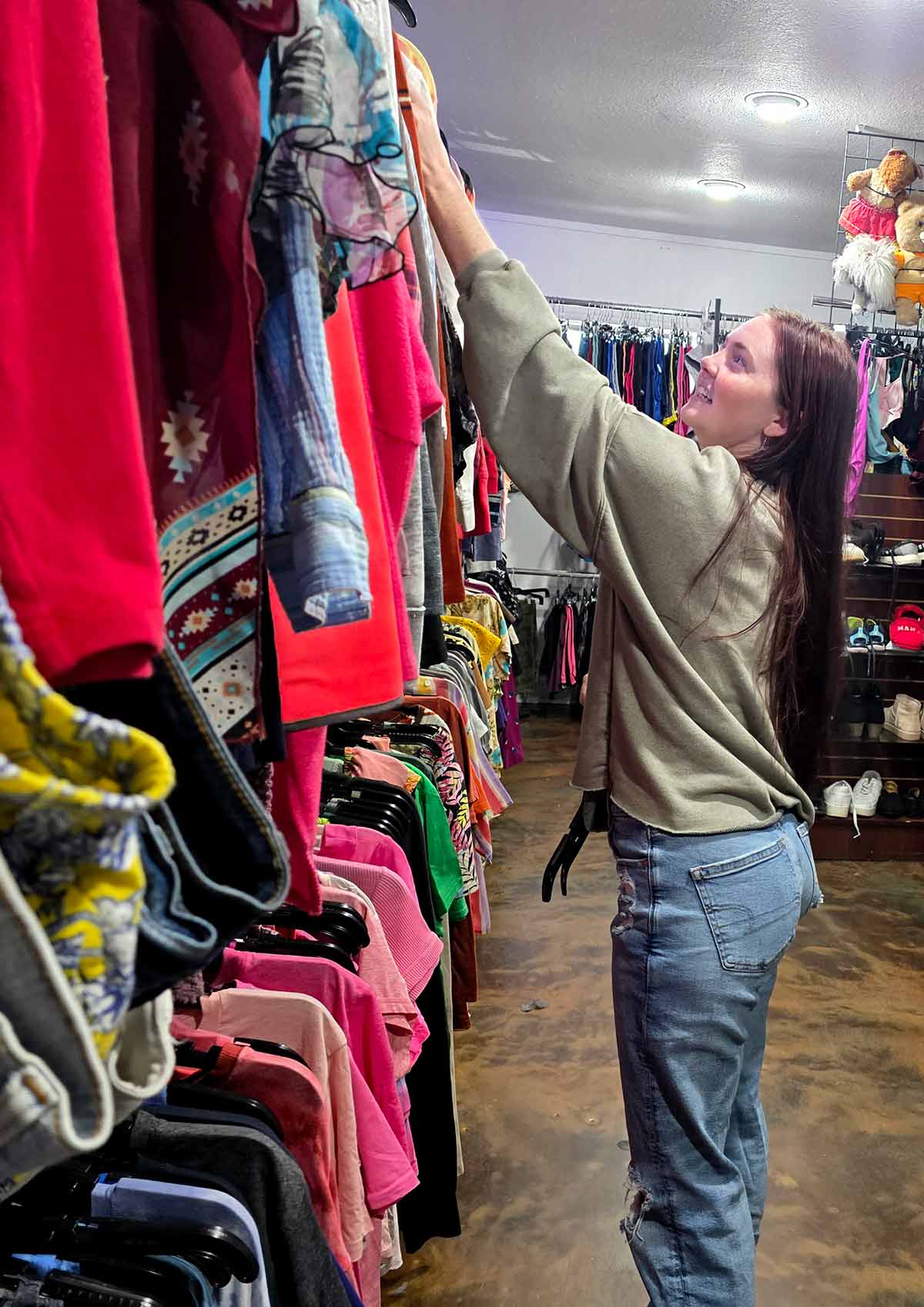
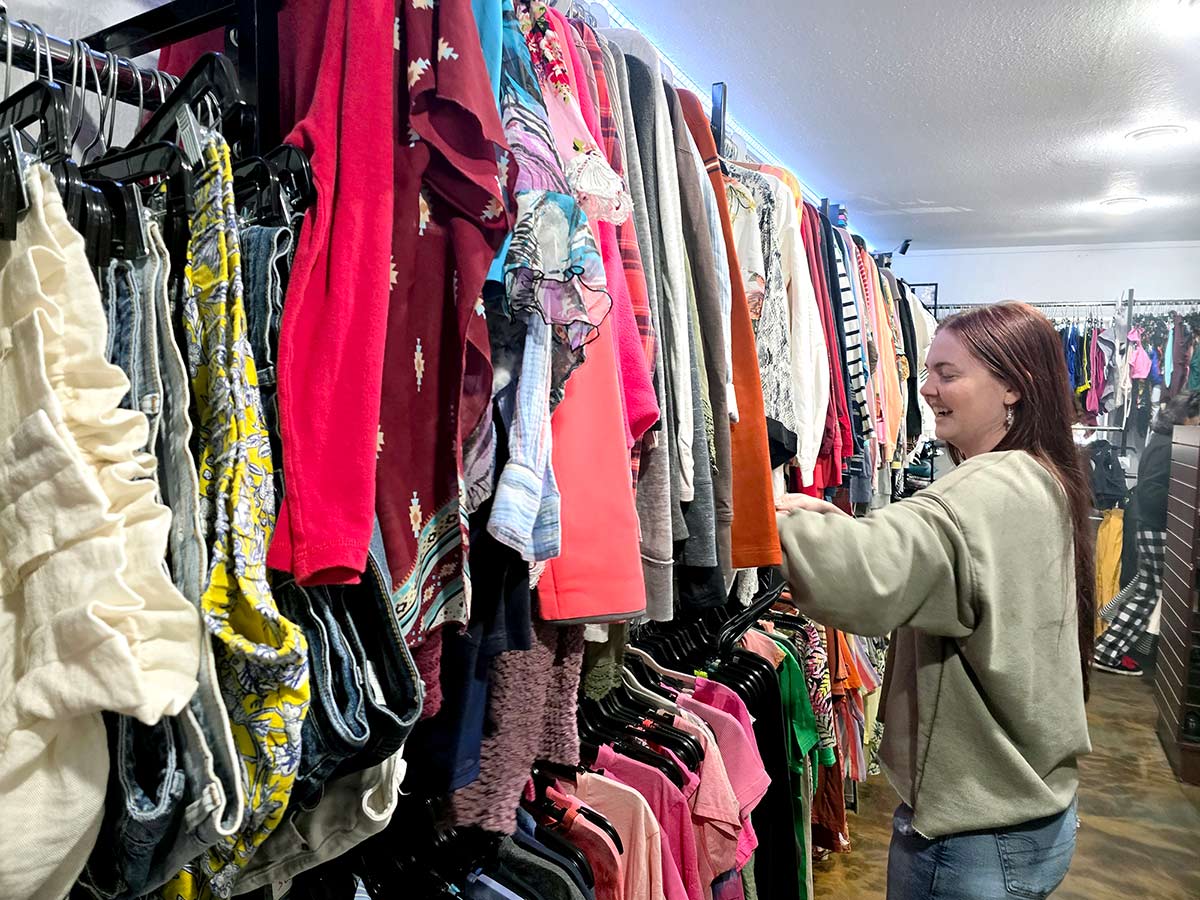
Going into thrift stores, you can see Shein tags helping to fill the racks. Buying from a thrift store, somebody can wear the top without contributing to the brands themselves and ensure that the shirt does not get thrown away immediately.
Virtual Thrifting
According to Lindsey Sparkman’s article, “Unraveling the Impact of Thrifting,” the global secondhand apparel market rose from $138 to $211 billion from 2021 to 2023. This rise is not surprising when we understand that buying secondhand is not only available in brick and mortar stores now, but has become something available at a person’s fingertips.
Facebook Marketplace has allowed people to buy and sell their used items for years, offering a way for people to earn a bit of cash while staying active on the social media site. Everything from clothing, furniture and even vehicles are available among the wide variety of items, all for prices determined by the seller and oftentimes available for debate.
However, Facebook Marketplace is not the only location where people can buy and sell secondhand.
In the world of secondhand apps, Depop is a popular source. According to the Depop Newsroom, “Depop is a circular fashion marketplace where anyone can buy, sell and discover desirable, affordable secondhand fashion.” Depop was founded in 2011, and now has 43.5 million registered users.
Whether it be digital or physical thrift shopping, there has been a noticeable rise in thrifting.
Thrifting As A Trend
“The Rise of Thrifting Culture in a Modern Society”, an article by Teri Silver published on planetaid.org, details how thrifting has become more popular in recent years. Silver begins by explaining that out of all generations, “Millennials and Generation Z are most often associated with the rise of thrifting culture.” She also writes that thrifting culture has not only gone digital in the manner of secondhand fashion apps, but has become popularized on social media.
Looking on Instagram, influencers such as @izzy_manuel publicize the importance of shopping sustainably and give inspiration to those who may be a wary of starting to shop secondhand. Francine Vito in her article, “Explainer: What Is Slow Fashion and How Can You Join the Movement,” states that slow fashion is, “A movement that advocates for environmental and social justice in the fashion industry” and “zeroes in on the problem of overproduction and overconsumption.”
Looking at fashion influencers often inspires and encourages people to continue shopping secondhand by making it a fashionable option.
Putting It All Together
All around, fast fashion has many ethical and environmental concerns. While fast fashion might be convenient, thrifting clothes allows a person to consume fashion without feeding into the business. Advocating for slow fashion helps to lessen the impacts of fast fashion. Donating used clothes can be a small step towards creating a more sustainable industry and environment.
After all, one’s choice of fashion truly shows their personality. Choosing creative pieces and forming a unique style by thrifting paints a more personal image, rather than simply following the trends of fast fashion and dressing like everyone else.