
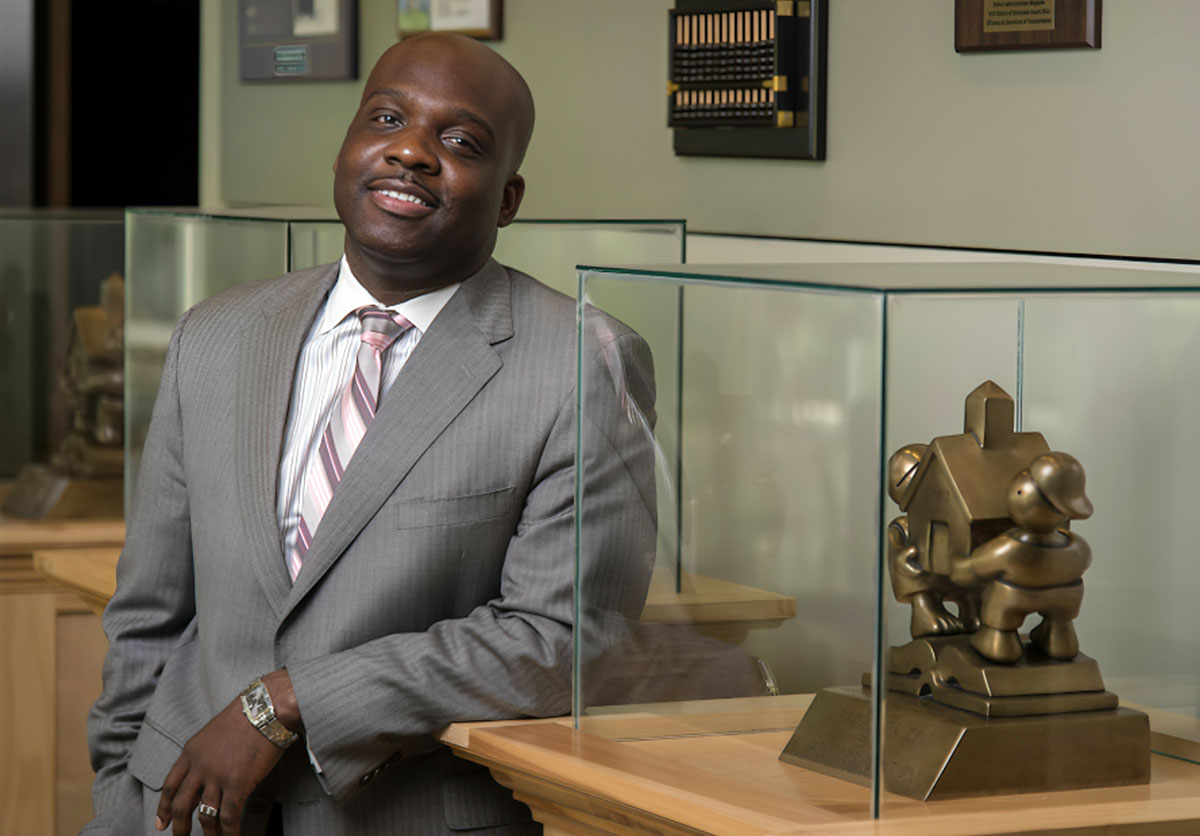
For many college students, trying to balance school, internships and career aspirations can be overwhelming. For Lannie Milon, mentorship is one way to help students find their path. Milon said mentorship is more than guidance, it’s his responsibility for the next generations.
“Mentorship has always been something that’s near and dear to me,” he said.
Milon, LU assistant professor of educational leadership, teaches doctoral students preparing for leadership roles in education. His career includes many years of experience within K-12 education.
“I have been a teacher, a middle school principal, a high school principal, and an executive director of schools,” he said. “Mentorship has always been part of what I have done throughout my career. Even as a graduate student myself, I was mentoring students.”
Milon’s commitment to mentorship stems from his experiences growing up.
“I come from a single parent home,” he said. “I’m a first-generation high school graduate. My parents didn’t even make it past high school.”
Learning to navigate his way through education on his own gave Milon a responsibility to mentor and help guide others through their struggles, he said.
“The value I find in mentorship is being able to pay it forward for others,” he said.
Whether it is answering questions or providing advice, Milon said mentorship begins with being present.
“Sometimes, people just need a set of listening ears,” he said. “And an informed set of listening ears can help them a great deal.”
Being a college professor wasn’t part of Milon’s plan, he said. After he obtained his doctorate from Penn State University, he decided to seek leadership positions within the K-12 educational system.
“When I graduated with my doctorate, I was asked to apply for a professorship,” he said. “However, at that time, the (public school) administrative pay scale was more attractive than the professor pay scale.”
But as he gained experience within educational leadership, Milon said he began to understand that being a college professor would enable him to have a wider impact.
“Having taken the route of being a practitioner first, I have gained a wealth of experience that really expands my mentorship possibilities,” he said.
Milon is a member of Kappa Alpha Psi Fraternity, Inc., a historically Black fraternity that focuses on achievement, leadership and service. The ideals of mentorship and uplift resonate within Milon’s work.
Several of Milon’s mentees have gone on to successful and fulfilling careers within various industries, he said. One particular instance that stands out was when one of Milon’s former students achieved national recognition.
“The Chicago Tribune contacted me and said they were featuring one of my mentees in their Sunday paper,” Milon said. “He mentioned me as his inspiration for why he mentors kids on the South Side of Chicago.”
Moments like that helped Milon realize the impact mentorship can have.
“I didn’t realize how impressionable I was to students until they went out and were professionals,” he said. “I have mentees that are millionaires. Some are doctors, pharmacists, engineers, finance bankers and first-round NFL draft picks.”
Milon said he thinks mentorship isn’t so much about creating success for someone as it is helping them realize their potential.
“People that grow into those positions already have it in them,” he said. “They’re just looking for someone to help them conceptualize their ideas.”
The motivation to continue to mentor students goes back to Milon’s sense of responsibility he learned as a young man.
“For me, it’s integrity,” he said. “I didn’t have anyone, so I understand the importance of being there.”
Mentorship can help students develop important skills outside the classroom, Milon said, and every moment can be a teachable moment.
Milon said if he could give his younger self a piece of advice it would be to trust his experiences and stick to his goals.
“Your experiences are tailor-made for you,” he said. “Don’t get distracted by measuring your encounters with someone else’s.
“A lot of people don’t finish the race. If you stay committed and keep going, you’ll be fine.”
At the end of the day, Milon said he believes mentorship has a very simple yet powerful purpose.
“If someone asked me why mentorship matters in one sentence,” he said, “I would say it matters because it’s a way to pay it forward.”