April 2026 marks the 25th anniversary of the National Sexual Violence Resource Center’s Sexual Assault Awareness Month. This year’s campaign theme is “25 Years Stronger: Looking Back, Moving Forward.”
“In the early 2000s, the primary goal of SAAM was awareness — both raising visibility of the teal ribbon and the meaning behind it,” the NSVRC website states. “By the mid-2000s, SAAM incorporated prevention more heavily, focusing on areas such as communities, workplaces and college campuses. These campaigns discussed ways that individuals and communities can stop sexual assault before it happens by changing behaviors and promoting respect.”
While the NSVRC heads up the campaign at the national level, local organizations advocate in Southeast Texas. One of these organizations is Girls’ Haven, located in Beaumont.
Ashley Gilford, Girls’ Haven clinical director, said a crucial part of SAAM is involving the local community and educating them about the prevalence of sexual assault and prevention methods.
“It’s important because it helps reduce the stigma,” Gilford said. “It empowers people to seek support, and it promotes accountability and safety within communities.”
Another important part of sexual assault awareness is noting what a victim might need to hear during their healing process, Gilford said.
“There are some things that we are able to do, like to be mindful of the signs that we can look for, but overall, let them know that it’s not their fault,” she said. “It’s important because victims of any type of violence usually associate the act with themselves and take responsibility and have some sense of guilt or shame or blame, which is not true at all. In fact, it is the other person’s behavior which we have no control over. But we are able to look for those signs and put interventions in based on the knowledge that we do currently have.”
The signs of sexual assault vary depending on the age of the victim, Gilford said.
“The spectrum is so broad and it’s so different because it can happen to individuals of all age groups,” she said. “If I’m talking to a child or a younger individual, we want them to look for signs such as, ‘Is this person being a bit more friendly to you than they are to other people your age?’
“One of the biggest things that we try to teach our younger individuals is the language. The language that is associated with surprise is excitement, something good, versus me telling them to keep a secret. Surprises are good, secrets are not. So, if someone’s telling me to keep a secret, I should probably tell someone else.”
A big difference in the signs of sexual assault in children vs. adults is autonomy, Gilford said.
“We have a little bit more autonomy as adults, the right to be able to say no, to be able to do certain things to assure that we are not putting ourselves in situations that may be unfortunate along the line,” she said. “For example, some of the basic things they teach you when you just get out of high school going into college (are) simple things like watching your drink, not leaving yourself unmonitored, not going with strangers, not meeting people online on your own.”
If someone suspects that someone in they know is being sexually abused, Gilford said the best thing to do is just to ask them.
“Growing up, our teachers used to always tell us there’s no such thing as a stupid question,” she said. “I like to make the comparison to if we have an inclination that someone is suicidal, we ask.
“So, if you have a thought or an inclination, don’t assume, just ask. Even if you don’t feel like they’re being completely honest. Just let asking open the door to let them know, ‘This person sees me, so when I am ready and I am comfortable enough to share my experience, I have someone I can go to.’”
After working to establish preventative measures, simply offering support and a listening ear is sometimes the only thing one can do in situations involving sexual assault, Gilford said.
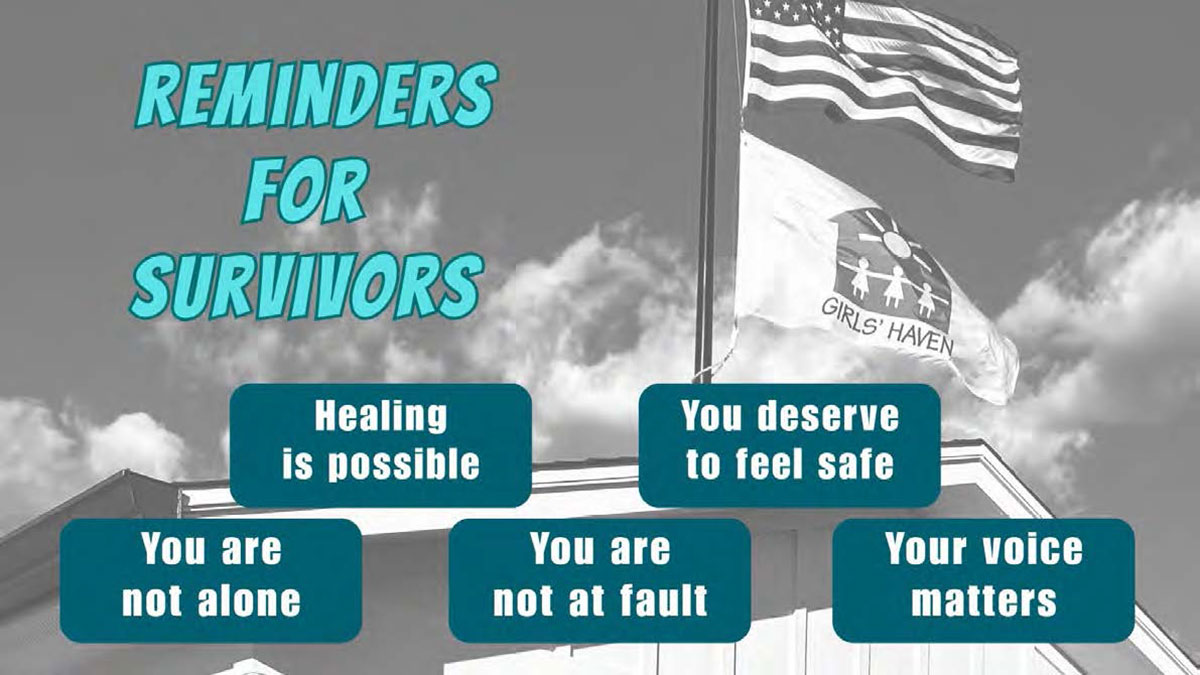
“The last message that I would like to share with victims or survivors of sexual assault is that they are not alone,” Gilford said. “You are not alone and what happened to you is not your fault. Healing is possible, and there are people and resources available to provide the support that you need to walk into your healing. Your voice matters and you deserve to feel safe, respected and heard.”
Girls’ Haven works with girls affected by sexual abuse, emotional abuse and physical abuse all year and is located at 3460 Fannin St. in Beaumont.