
If one walk through the Communications Building at any time of the day, one finds groups of people silently interacting with each other through wordless sign language.
Lamar University’s Deaf studies and Deaf education program is the third largest program in the nation that produces teachers and educational leaders who are Deaf or hearing.
2026 marks the 29th anniversary of April being recognized as Deaf History Month.
“To some, it may appear to be just another awareness campaign added to an already crowded calendar,” Kathleen Brockway, a graduate assistant in the department of Deaf studies, said. “But for millions of Deaf Americans, April represents something fair deeper: recognition, resilience, language, innovation and the long arc of independence.”
Several important historical milestones in April make month ideal to commemorate the Deaf community.
On April 8, 1864, President Abraham Lincoln signed the charter authorizing Gallaudet University, a school for the Deaf and hard of hearing, to grant collegiate degrees. The University would go on to become a global center for deaf scholarships, language development, research and leadership.
Brockway said the moment was historic because it affirmed that Deaf Americans deserved access to not only primary education, but to higher learning and professional careers.
A week later, on April 15, marks the opening of the American School for the Deaf in Hartford, Connecticut, the oldest permanent school for Deaf student in the United States, where the single-hand American manual alphabet was introduced and formalized.
The alphabet is still used to today and is formally known as American Sign Language. ASL remains a powerful linguistic tool for fingerspelling names, places and technical vocabulary.
“ASL is a complete, natural language with its own grammar and structure,” Brockway said. “It is capable of poetry, academic debate, humor, storytelling and scientific explanation, yet for much of history, sign language was misunderstood or dismissed.”
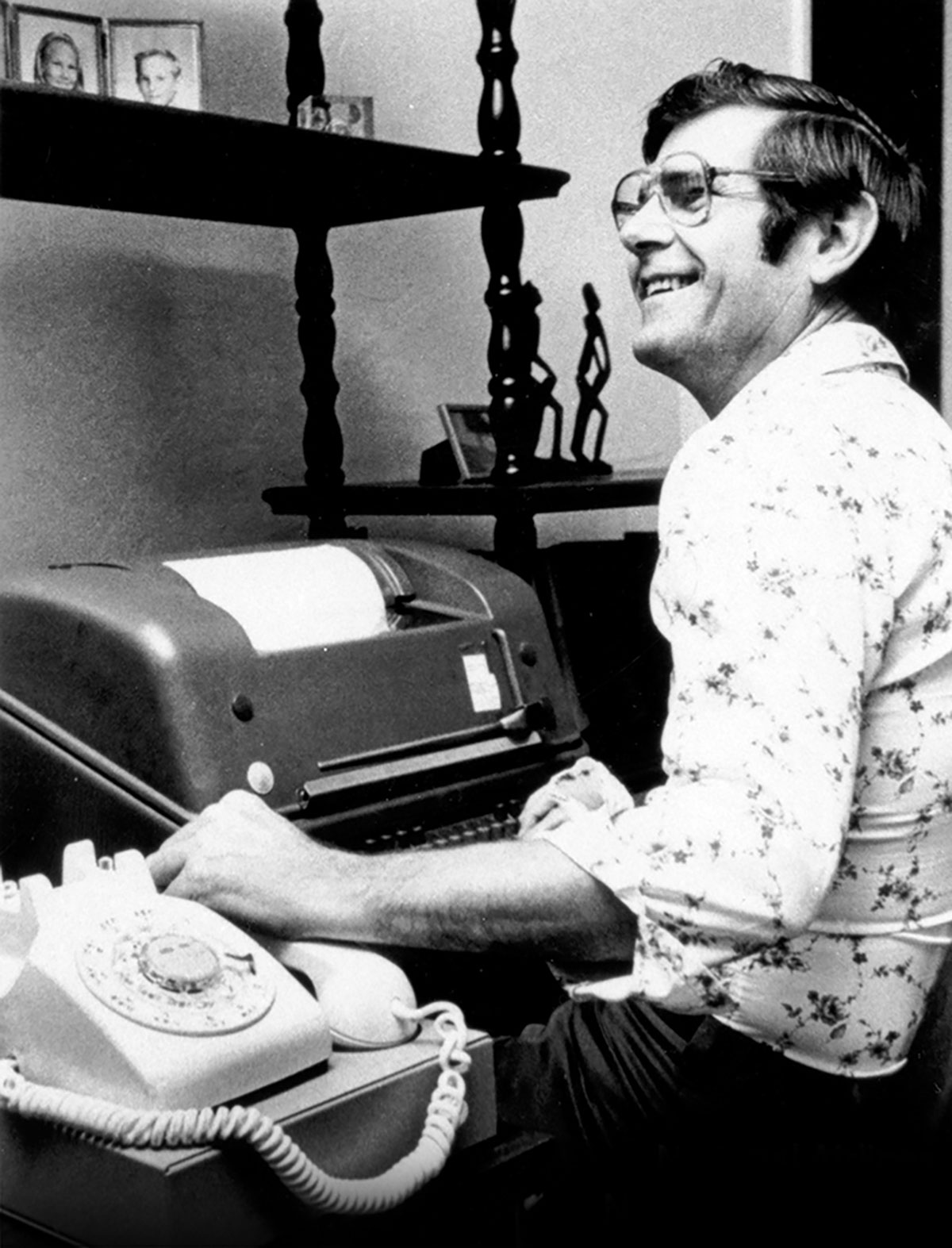
Though the Deaf community has technology to communicate easily today, before 1964, Deaf individuals could not independently use the telephone to communicate. Many relied on neighbors, coworkers or family members to make calls on their behalf. Privacy was limited, and opportunities were often delayed or lost, Brockway said.
However, in 1964, Robert Weitbrecht, a Deaf physicist and engineer born on April 11, 1920, invented the acoustic coupler, a machine which enabled teletype machines to connect through modern lines and became the foundation of the Teletypewriter (TTY) modem.
Over time, the innovation evolved into videophones and Video Relay Services, allowing Deaf individuals to communicate naturally in American Sign Language through live interpreters on screen.
Brockway said today’s videophone technology restores what early telephones excluded: the ability to communicate visually and independently.
National Deaf History Month does not just honor the past, but also the present and future.
Deaf Mom and Dad Day, observed on the last Sunday of April, celebrates Deaf parents and the generational transmission of language and culture.
“The deeper truth is this: Deaf history is not silent as it lives in the hands that move with precision and grace,” Brockway said. “It lives in the classrooms where visual language fills the air, in old photographs of families signing across the kitchen, and the glow of a video screen where two people sign across cities, states and continents.
“When we celebrate National Deaf History Month, we do not do so out of charity, rather we do so out of respect.”