
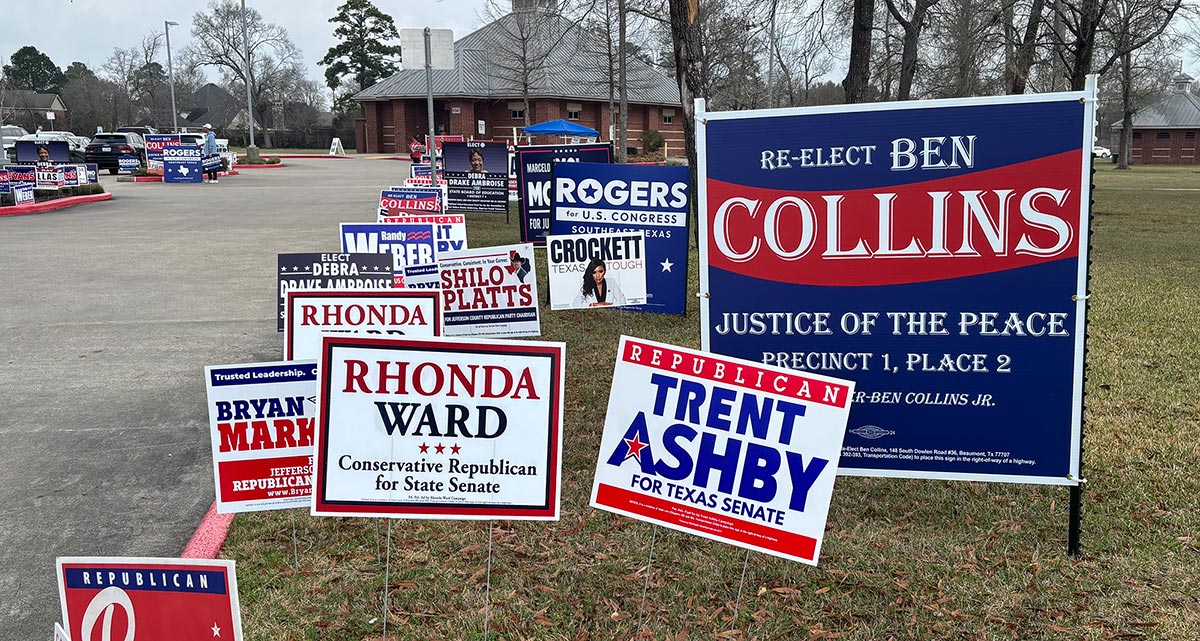
Texas voters are in the middle of the first major election of 2026 as early voting continues across the state ahead of the March primary. Early voting began Feb. 17 and runs through Feb. 27, offering voters the opportunity to cast ballots before Primary Election Day, March 3.
Although general elections in November receive more public attention, primary elections play a central role in shaping the ballot. A primary election determines which candidates from each political party will advance to the general election.
Texas operates under an open primary system. Voters are not required to register with a political party. However, when casting a ballot, they must choose whether to participate in the Republican or Democratic primary. Once that selection is made, voters cast ballots only for candidates within that party. Participation in one party’s primary does not require long-term party affiliation, but voters may not cast a ballot in both parties’ primaries during the same election cycle.
The March ballot includes federal, statewide, judicial and local races. At the federal level, voters will select party nominees for one U.S. Senate seat and for all 38 Texas seats in the U.S. House of Representatives.
Several statewide executive offices are also on the ballot. Voters will choose party nominees for governor, lieutenant governor, attorney general, comptroller of public accounts, agriculture commissioner, land commissioner and railroad commissioner.
Judicial contests are also included, with seats on the Texas Supreme Court and the Court of Criminal Appeals up for nomination. In certain districts, voters will also select nominees for the State Board of Education.
Local races vary depending on the county. Ballots may include county judges, commissioners, district attorneys and other judicial offices.
In order to make sound choices, voters should look at sample ballots in advance of voting. Sample ballots and polling information are available through county election offices and the Texas Secretary of State’s website.
For students balancing academic schedules, work and extracurricular commitments, early voting can provide flexibility. During the early voting period, many counties allow residents to vote at any designated early voting site within the county. On Election Day, voters are typically assigned to a specific precinct location. Checking polling hours and site information ahead of time can help ensure a smoother voting experience.
Texas law requires voters to present an approved form of photo identification when voting in person. Acceptable forms of identification include a Texas driver license, Texas personal identification card, U.S. passport and other government-issued IDs. Voters who do not possess one of the listed forms may have additional options available under state guidelines. Election officials advise voters to review identification requirements before arriving at a polling location.
Primary elections serve as a critical step in narrowing the field of candidates. In races where no candidate receives more than 50% of the vote, a runoff election between the top two candidates will be held.
For many college students, the 2026 primary represents one of their earliest experiences participating in a statewide election. Understanding the mechanics of the primary process, from selecting a party ballot to confirming polling locations, will make the process more straightforward.
While the March primary does not finalize who will hold office, it plays a decisive role in determining the choices available to voters later in the year.
For more information, visit the Texas Secretary of State website at sos.state.tx.us/
elections/voter/important-election-dates.shtml or the Jefferson County Elections website at jefferson elections.com.