Dishman hosts Corpus’ drawings about immigrant experience
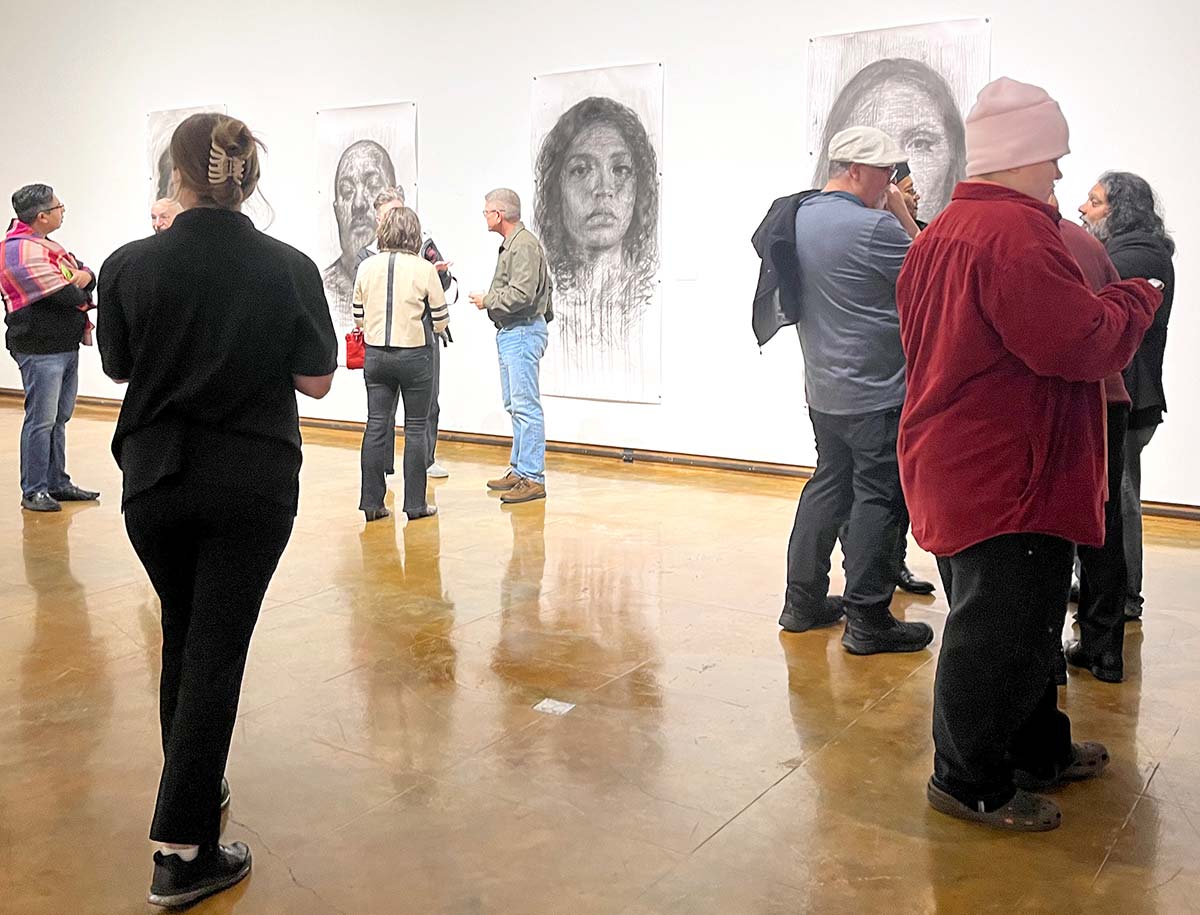
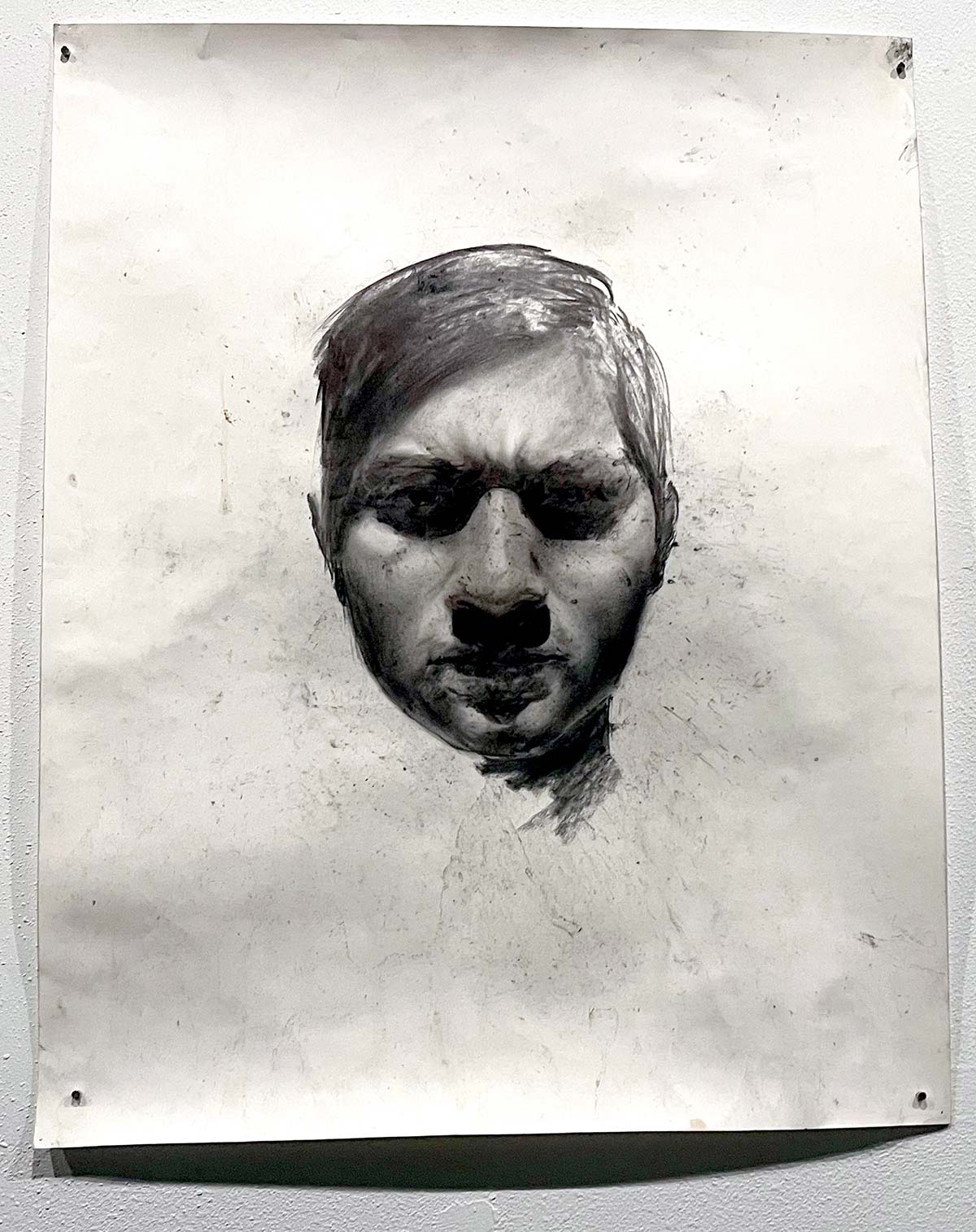
The rushing water and shadows of tree branches of the Rio Grande come to life in Luis Corpus’ exhibition, “The Tether that Binds Us.”
The show is on display at the Dishman Art Museum until April 2.
Corpus was inspired by wanting to communicate the truth he knew surrounding the communities along the border. He started the collection in the summer of 2017 after gathering materials. He made a Facebook post seeking a Deferred Action for Childhood Arrivals recipient to highlight.
“I mean, they’ve been here since they were little kids,” Corpus said. “Mexican-born, been here since they were little kids. And then in my classes, there were some of the best kids in that class, and they communicated that sense of the in-between very well, and counter all this negative stereotype rhetoric — they are on the straight and narrow.”
Kids don’t think twice about the way they grow up, Corpus said.
“When you grow up, whether you grow up in poverty, whatever the thing is, you’re joyous,” he said. “It’s not until you get a little bit older, and you have to really establish yourself. You will encounter things that you know through no fault of your own. I’m pushing and I’m trying and I’m striving.”
The challenge continues as kids go to college, Corpus said.
“My dad stopped going to school at second grade,” Corpus said. “My mom at fifth grade. How are they going to help me navigate college? They can’t, even if they wanted to. They don’t have that foundation.
“We have more in common with people who are growing up poor than we do (with those) who don’t understand what it’s like to deal with it.”
Despite that, Corpus said he was blessed in many ways, and his family held similarities to other families.
“I also realized that if you remove all this context — who we are, where we come from, the language, the culinary, because I love me, some beans, tortillas, all that stuff — but you remove it, and we’re just a regular, every day, typical run-of-the-mill American family, because everybody is just trying to get by.”
Corpus’ previous encounters with the Rio Grande were crossing its bridges. However, to gather materials, he knew he would have to go to the riverbank, posing a challenge.
“It’s just the uncertainty of what to expect when I go down there,” he said. “Also working with the materials itself, because it’s an unconventional method, trying to figure out a technique that was going to work to be able to create the images was a bit difficult.”
Using the water from the river came after a lot of thought, Corpus said. The initial use of drenching before drawing softens the paper; drawing would scrape the paper.
“I then started using some sandpaper and using it to soften up the charcoal, to make a charcoal powder,” he said. “And then use the water to create that marbling.”
The Rio Grande is a physical barrier between the U.S. and Mexico. The byproduct is the people living in the U.S. keeping their culture alive.
“It’s an integral part of me, and I think, with the river, it looks really calm, classic, but that water will take you,” Corpus said. “There’s such that duality. And the fact that it does exist in between two countries, I think it serves as a metaphor that allows us to remain dignified.”
Chloe Thompson, Dishman Art Museum administrator organized the exhibition after meeting Corpus at the Texas Art School Association.
“The main reason I brought this show is because I want people to understand that they have a place here,” Thompson said. “They are loved; they are safe. We appreciate them and value them.”
The political climate and lack of Hispanic voices in public media spoke to Thompson, she said.
“I wanted to give a platform for more immigrant voices,” Thompson said.
Corpus said he understands the exhibition might not be for everyone. However, he hopes people look at the drawings and respond to what is being depicted.
“Then if they care to read the artist’s statement, and realize what the work is about, I want to hope they rethink any biases that they might have, at least question it themselves,” he said.
The Dishman Art Museum is located at 1030 E. Lavaca St. Admission is free.
For more visit, lamar.edu/ dishman.