
Dia de los muertos provides links to ancestors
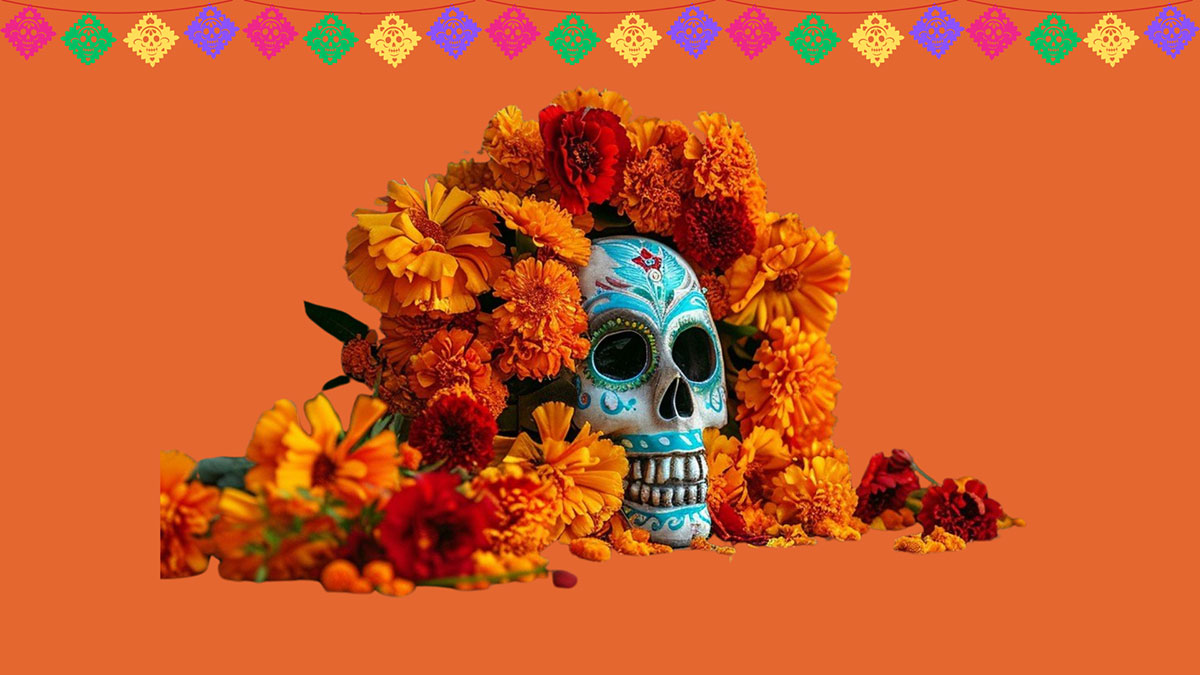
The sights of calaveras, marigolds and candles fill homes as families celebrate their loved ones on Dia de los Muertos.
The holiday dates to pre-Hispanic times with the Aztecs. They believed Mictēcacihuātl, the Lady of the Dead, ruled Mictlán, the underworld, and watched over the bones of the dead, which were used to create a new life.
The Aztecs held a month-long celebration every year in her honor.
After the arrival of the Spanish, Dia de los Muertos merged with Catholic holidays, observed on Nov. 1 and 2, All Saints’ Days and All Souls’ Day, paving the way for the present-day holiday.
Families gather at cemeteries as it is believed the souls travel from the land of the dead to the land of the living.
Altars, known as ofrendas, are constructed in homes with pictures of loved ones and things they liked. The ofrendas are personalized to the departed, as they are offerings to welcome the dead to visit the land of the living. However, there are common items seen throughout all of the altars.
Candles are placed along the ofrenda to light the way for the souls, so they don’t get lost on their journey.
The marigolds, known as cempasúchil in their Aztec name, are strong in fragrance. The altar coordinator for the Hollywood Forever Cemetery in Los Angeles, Angie Jimenez, told NPR, “An altar just isn’t complete without (marigolds). And if you believe what the Aztecs believed, then your ancestors need the scent to find their way back to you.”
Another common image seen throughout the holiday is the calaveras, the iconic skulls. The skulls are made of sugar and placed along the ofrenda.
Mexican illustrator José Guadalupe Posada is best known for his skull prints. He was the creator of La Calavera Catrina, who is an icon in celebrations.
The original meaning behind his skull prints was political satire. Since then, the skulls have become synonymous with the holiday.
The ofrendas are filled with color to contrast the darkness that is associated with death. It is meant to celebrate the life that was once lived. Papel picado is one of the most common ways color is added. The tissue paper objects hang from the sides of the ofrendas.
The holiday is celebrated every year in Mexico, but it is rising in popularity in the United States. The rise can be attributed to movies such as “Coco.” The movie follows Miguel as he suddenly finds himself in the land of the dead. He then meets Hector, embarking on the mission of revealing the truth about the generation-long ban of music from Miguel’s family. The film is steeped with traditional imagery.
Items for an ofrenda can be found in stores now, but it is important to remember the history and meaning behind the holiday.
Although Dia de los Muertos has adapted, it is important to know it’s not a Mexican Halloween. The holiday is a reminder that death is inevitable, but memories allow one to keep their loved ones alive.